
The Prequel Dilemma
I had an epiphany about Trek prequels (and really, prequels in general).

I have noted more than once on the podcast that I am not averse to prequels, and even often greet them with some level of positive anticipation. I am of the view that a well-developed fictional world has stories to tell about not just its fictional future, but also its fictional past. Just like one can be intrigued by stories from real history, even if you know how it all turns out, one can want to know more about what happened before some beloved story. Sometimes the tale itself is worth the effort, and other times there are lesser-known elements that are worth bringing to the fore.
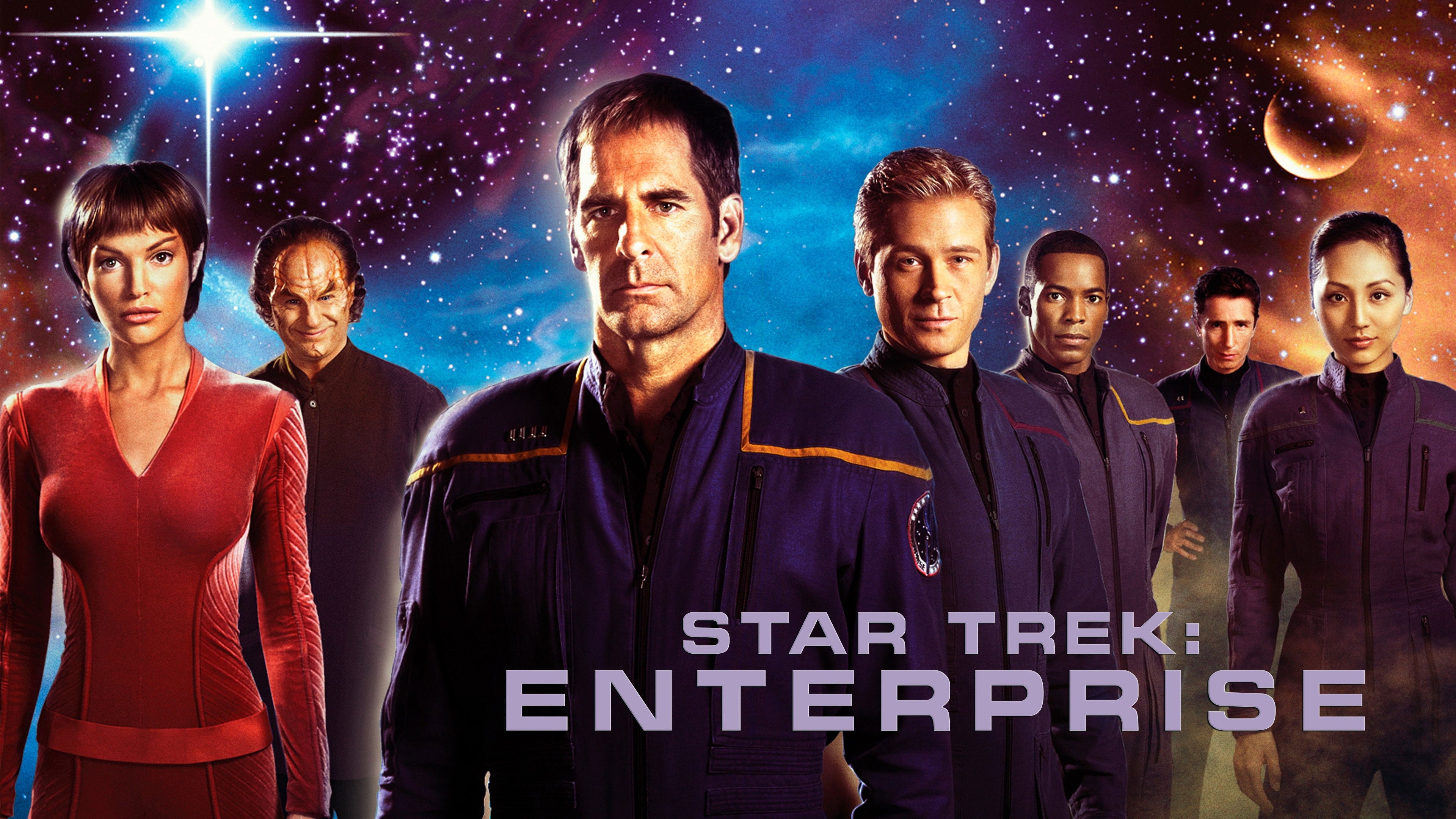
This all comes to mind primarily because I am finishing up my first full, complete watch of Star Trek: Enterprise (in conjunction with a podcast I listen to, The Greatest Generation). I had seen a large chunk of the show when it first ran, but it was at a time of life with small kids, and it was a low priority. I missed huge chunks of S2 and most of S3.
Thinking about some of the deficiencies of Star Trek: Discovery, which was also a prequel show for its first two seasons, as well as Star Trek: Strange New Worlds, made me realize the varying degrees these shows suffered from a major pathology for prequels.
The Prequel Pathology
The main prequel pathology is, in my mind, falling in love with the idea of a prequel without having a really good reason to do a prequel. I would note, by the way, that the same pathology can exist for sequels. The quest for more money is not a good enough reason, artistically, to do either (but business decisions are what they are).
I would argue that the main reason to make a prequel should be that there is a particular story to tell that can only be told in a fictional past. That means some event or character that is truly worth investigating.
Keeping in mind, of course, that execution is also often a problem (which is, of course, a problem for stand-alone properties as well).
For example, the Star Wars prequel trilogy had at least two compelling reasons to exist: the story of how Anakin Skywalker became Darth Vader (a key character) and the history of the Clone Wars (a key event). Unfortunately, Lucas was more focused on digital filmmaking tools and telling silly stories about C3PO’s origins, and we got some pretty lousy stories as a result.
Setting aside execution, let’s get back to the question of whether a prequel fulfills its goals. Does the prequel have a raison d’etre beyond just being a thing in a given universe? For example, did Obi-Wan Kenobi really have a reason to exist, narratively speaking, beyond simply making more Star Wars content? I mean, sure, seeing Ewan McGregor play Kenobi is a delight, but that isn’t ultimately enough. (I would note that the show created weird problems for Kenobi’s relationship with both Leia and Darth Vader, but that is another discussion.)
Star Trek: Enterprise and Star Trek: Discovery had potentially compelling stories to tell: the founding of the Federation and the Klingon-Federation War. However, the main problem with both was that those reasons were backgrounded, in whole or in part.
Let’s start with DISCO. The first season of the show had a lot of potential, and while I enjoyed it more than I did seasons 3-5, it failed to live up to its premise as a prequel, diverting instead into a Mirror Universe tale that eventually kind of circles back to the Klingon stuff, but not in a wholly satisfying way.
There was a lot left on the table about Klingon politics and society that could have been, well, fascinating (just visualize a Spocked eyebrow if you will).
Season two of DISCO is probably my favorite of the series, but there is nothing about it that had to be told in the early 23rd Century. Sure, Pike and Spock were great (IMO), but the story itself was not particularly the result of its prequelness (even with the Section 31 stuff).
Enterprise helps really bring this topic to the fore of my mind because the bottom line is that much of the show did not have to exist as a prequel, which is why, ultimately, it is one of the lesser shows in my personal Trek ranking. It is also why season 4 of the show is both my favorite and a bit of a bitter pill, as it shows what the show could have been if done right from the beginning.
A good 22nd-century set program should have been focused on how humans encountered and dealt with the panoply of alien species that would form the Federation. While season one had some episodes, like “The Andorian Incident” and its sequel, “In the Shadows of P’Jem,” it really mostly featured stories that could have been in TOS, TNG, VOY, or even DS9 (i.e., any other show in any other timeline). There are some minor variations that might have been needed (like concerns about the transporter, their warp limitations, or translation issues), but for the most part, they were just standard Trek stories.
I will confess to having enjoyed the re-watch/completion more than expected, but I still think that the prequel promise was squandered until S4. The Temporal Cold War and Xindi arcs, for example, could have existed to one degree or another in another 24th-century set show, or even one set after Voyager. Indeed, at the time it aired, it felt like inserting the Temporal Cold War stuff (which was never especially well-executed, IMO) was an immediate confession that they hadn’t figured out how to best exploit the setting they had chosen.
When we finally get to S4 and Manny Coto’s tenure as show runner, we see a far more interesting deployment of stories that made sense for that era of Trek. It was only then that it really started to live up to the promise of the premise. There was a real track being laid for a Federation origin story. It is a shame that the show didn’t get its full seven years.
Let me toss in a comment on Strange New Worlds. It is, to me, the best of new Trek (alongside Lower Decks). And it has some of the good prequel motivation I noted above: there are compelling reasons to be interested in the character of Christopher Pike, especially after his turn on DISCO and the truly interesting turn to give Pike knowledge of his fate. Indeed, the first season finale, “A Quality of Mercy,” illustrates the way in which a prequel can tell a compelling story.
I will say that, like Enterprise, SNW often does not take advantage of its prequelness to tell us stories that are unique to that timeframe and those characters.
Prequels that actually avoided the pathology in question are also in the Star Wars universe: Andor and Rogue One. Both the TV show and the movie that inspired it told interesting background stories drawn from fictional histories that not only made the existing property richer but were great stories in and of themselves.
Andor is perhaps the crown jewel of all prequels. First, from an impressive technical point of view, it is the prequel of a prequel: a pre-prequel! It exists as a prequel to Rogue One, which is a prequel to the original Star Wars. Indeed, from the last scenes of the last episode of Andor through to Rogue One and into Star Wars: A New Hope is one continuously connected narrative that spans a fairly brief amount of time.
Both Andor and Rogue One tell us compelling stories about compelling characters, and their existence enriches the stories that chronologically come after their narratives. Those are the hallmarks of a good prequel.
Another all-time prequel is Better Call Saul, whose motivation there was simply exploring the backstory of a relatively minor character from Breaking Bad. This is an example of just a really great set of creators being allowed a chance to play further in a world that had more stories to tell.
So, I am curious as to anyone's thoughts on prequels in general. Or if anyone has other examples of the good and/or bad prequels that come to mind.
 | A guest post by
|
Worst part of Enterprise: the theme song.
Best part of Enterprise: T'Pol and all we learn about the Vulcans.
Totally agree on Strange New Worlds. Yes, the second half of the latest season was poor but I think it’s one of my favourite Trek shows
Better call Saul is a great example where the prequel is actually, in my opinion, better than the original show
I don’t like the Star Wars prequels but my son grew up with them and to him Ewan McGregor is Obi Wan and Revenge of the Sith is one of his favourite films of the series. He still thinks Attack of the Clones is a lot of drek though! 😁